Medical-Grade Skincare Treatments At Home
Clear, Smooth, Healthier Skin
Private concierge treatment services at your convenience serving Raleigh, NC
Say goodbye to waiting rooms and hello to at-home clinical skincare treatments.
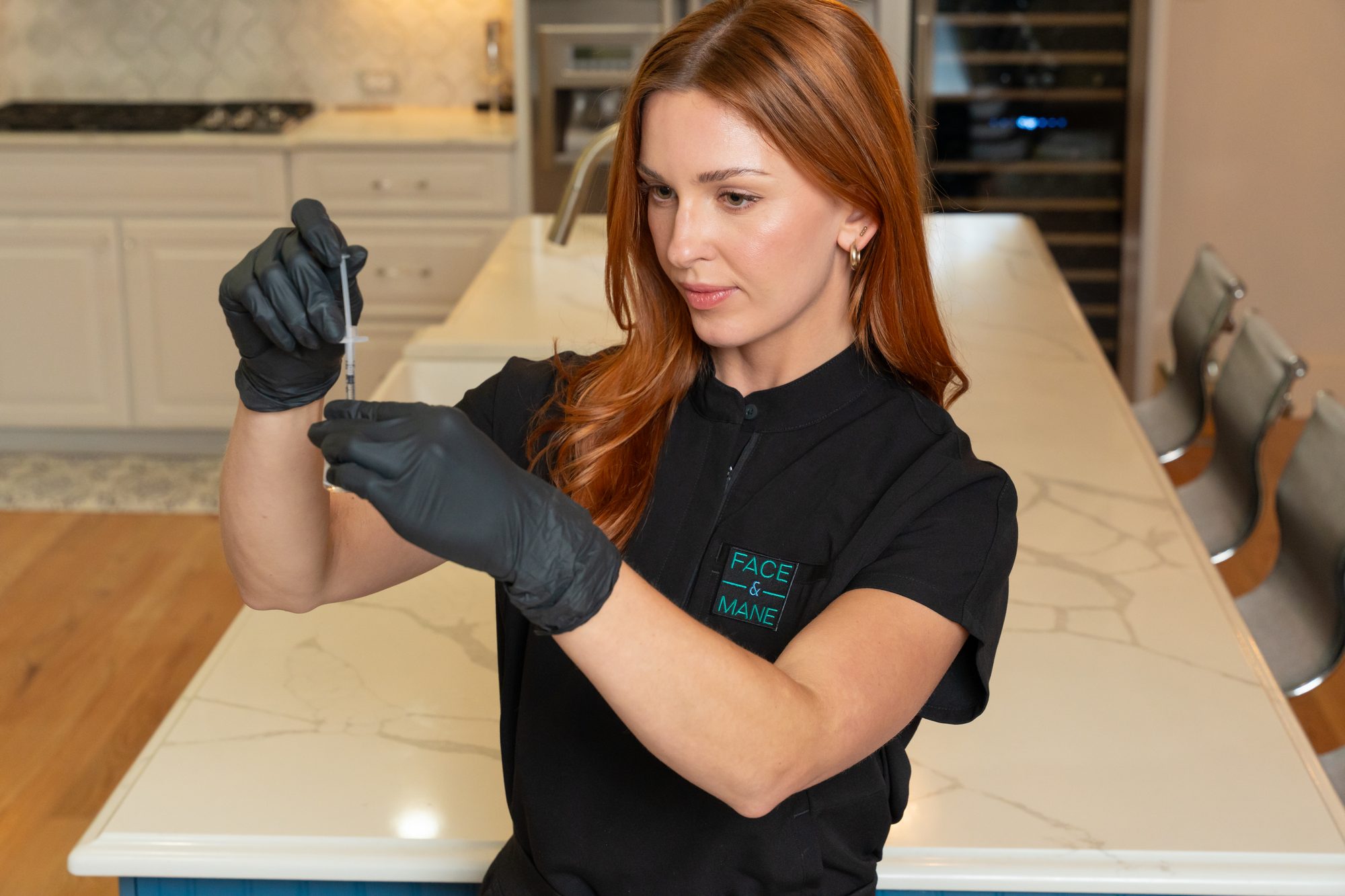
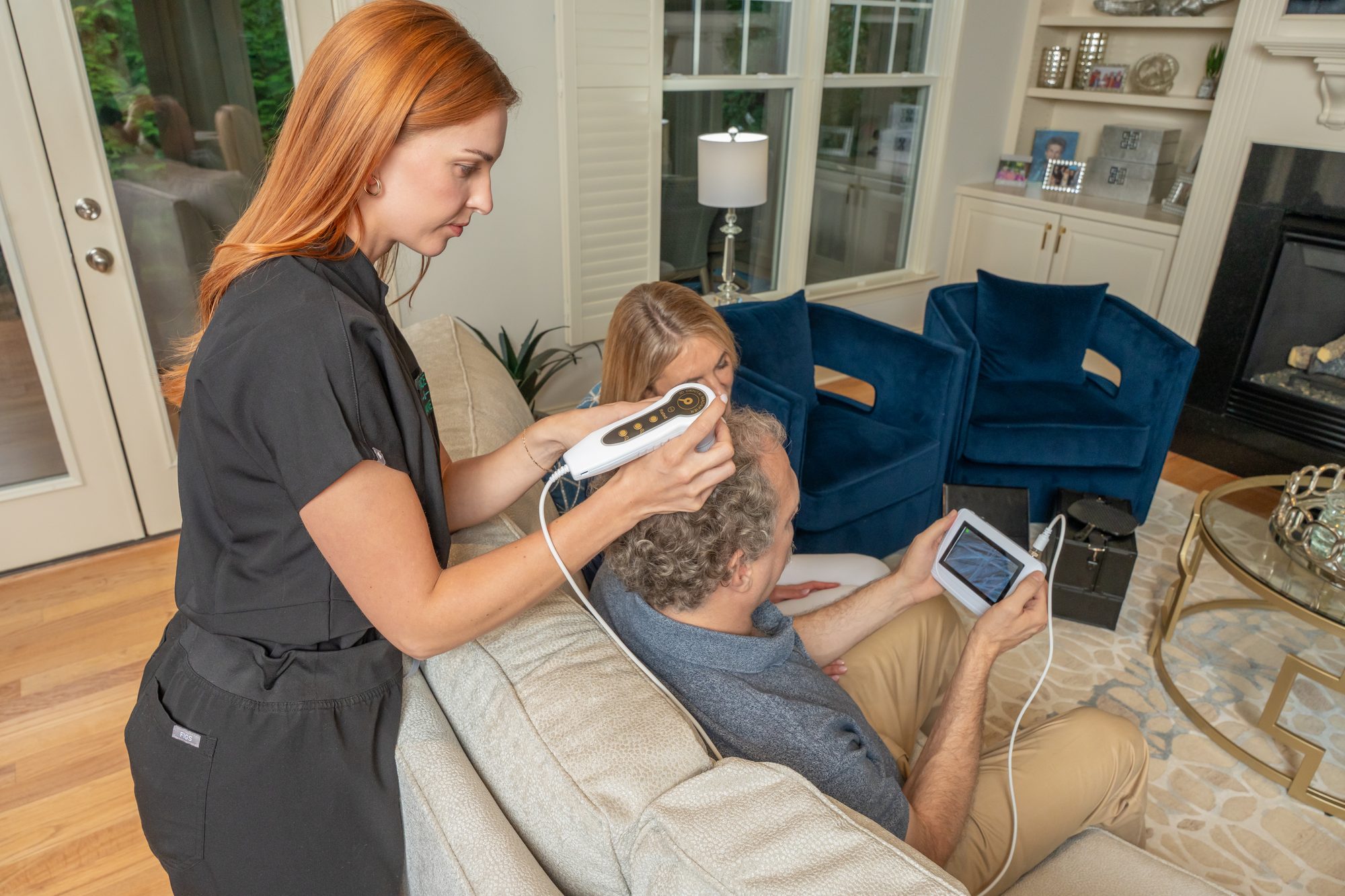
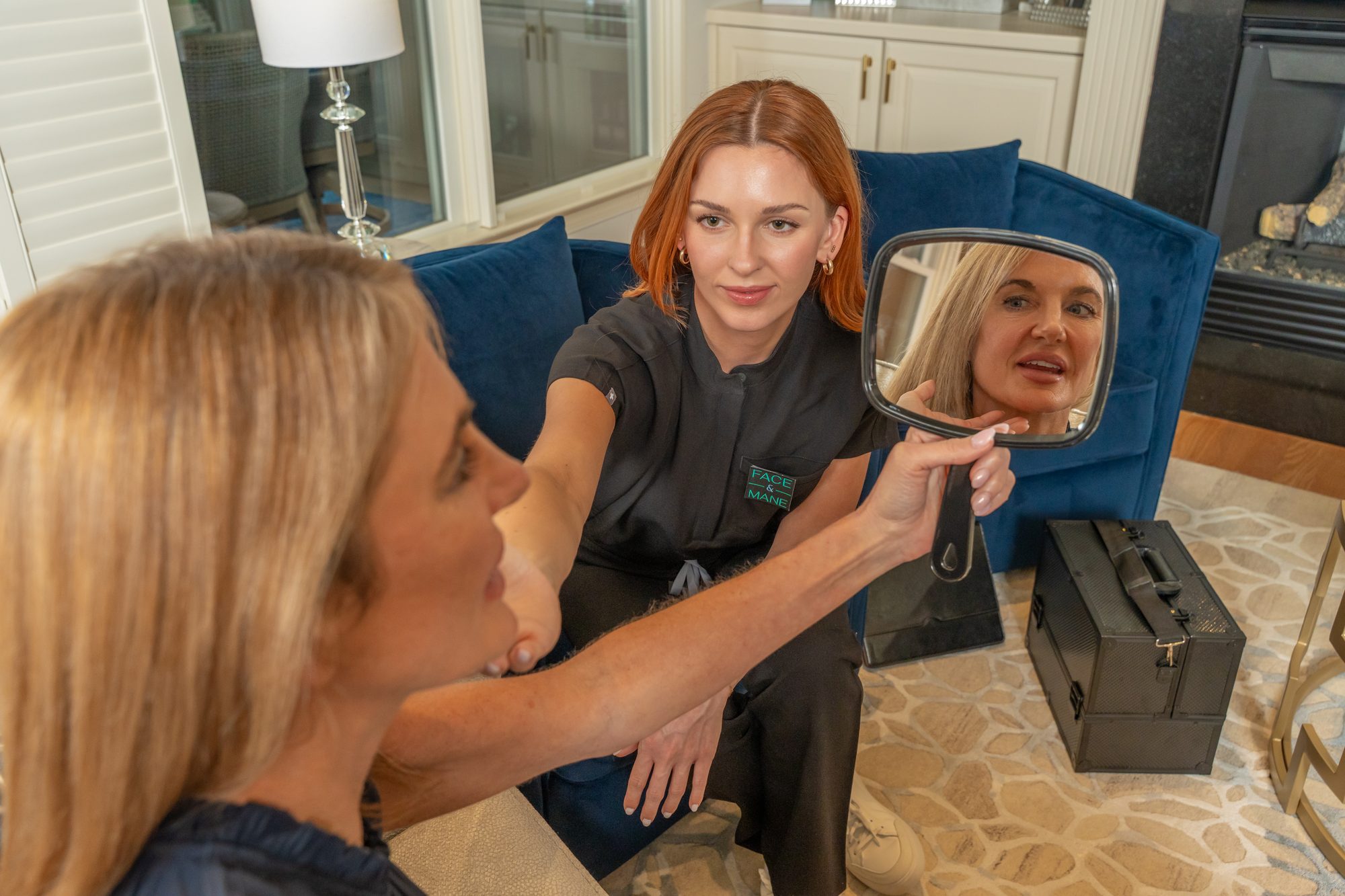
Face & Mane offers advanced medical-grade skincare treatments at your home, office, or preferred location. Every treatment begins with a comprehensive skin assessment so your provider can recommend the safest and most effective solutions for your skin concerns. Many of our treatments are regenerative meaning they stimulate collagen production naturally repairing your skin.
Whether your goal is healthier skin, improved texture, brighter tone, collagen stimulation, or preventative anti-aging care, our certified medical providers create personalized treatment plans designed specifically for you.
Your provider evaluates your skin type, concerns, medical history, and goals before recommending the treatments that best fit your needs.
Professional Skincare That Goes Beyond Over-the-Counter Products
Healthy, youthful skin requires more than a good moisturizer.
Medical-grade skincare combines professional procedures with clinically effective products that are formulated to penetrate deeper into the skin than traditional retail products. By pairing advanced treatments with customized prescription-strength skincare, we can address concerns that over-the-counter products often cannot. The result is smooth, clear rejuvenated skin.
Every Face & Mane treatment begins with a personalized evaluation of your skin type, medical history, and goals. Your provider then develops a personalized treatment plan and regimen tailored specifically to your needs.
Whether you’re looking to improve acne, pigmentation, fine lines, sun damage, skin texture, or overall skin health, our goal is natural-looking, healthy skin that continues improving over time.
Skincare Treatments We Offer
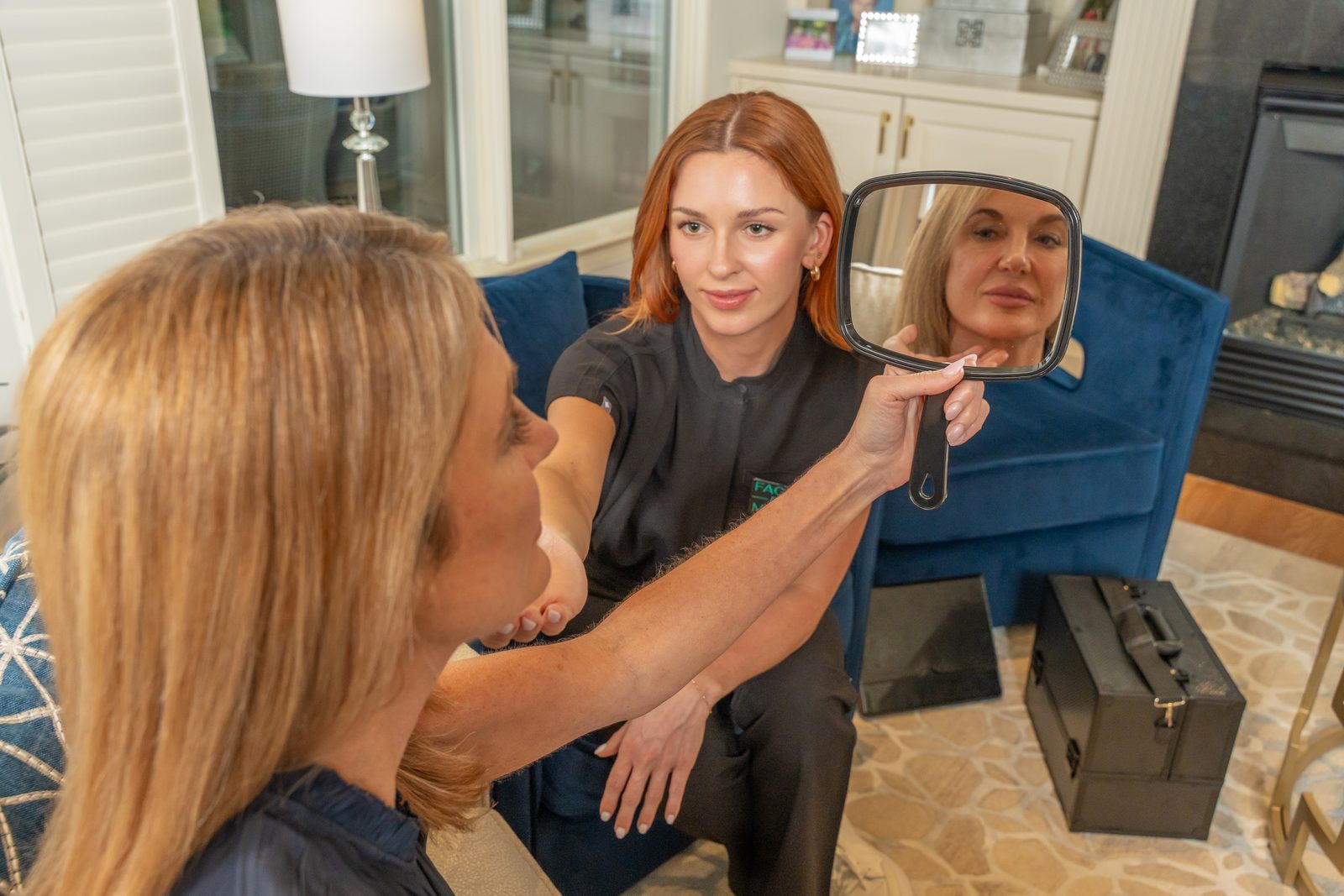
Our treatment plans combine professional procedures and medical-grade skincare to help maintain long-term skin health and results. Face & Mane skincare treatments have been developed by Dr. Deborah Hudak who has provided aesthetic treatments in her own Med Spa for 30 plus years. In addition to practicing medicine Dr. Hudak also has an undergrad in chemical engineering. This gives her exceptional insight into which chemicals and treatment programs work best for a particular condition or desired outcome.
Prescription Skincare Plan
Your provider will work with you to develop a skincare regimen designed specifically for your skin type and concerns. Professional-strength products work together to improve skin health, prevent premature aging, and maximize the results of treatments.
Daily, at homeNoneChemical Peel
Professional exfoliation treatments that remove damaged surface cells to improve pigmentation, fine lines, acne, uneven texture, and overall skin tone while stimulating healthier skin renewal.
30–45 minutesLight: minimal; Medium: 5–7 days peelingMicroneedling
A collagen induction treatment that creates controlled micro-channels within the skin to stimulate natural collagen production, improving acne scars, enlarged pores, wrinkles, and skin texture with minimal downtime.
60–90 minutesRedness 24–48hPRP Facial
Often referred to as the “Vampire Facial,” Platelet-Rich Plasma (PRP) uses your body’s own concentrated growth factors to promote collagen production, improve skin tone and texture, and support natural skin rejuvenation.
90–120 minutesRedness 24–48hExosome Facial Therapy
A next-generation regenerative treatment used in combination with low-level ultrasound or microneedling that help support skin repair, reduce inflammation, stimulate collagen production, and enhance overall skin rejuvenation.
60–75 minutesMild redness 24–48hDermaplaning
A gentle exfoliation treatment that removes dead skin cells and fine vellus hair (peach fuzz), leaving skin smoother, brighter, and better prepared for skincare products and makeup application.
30 minutesNone
Choosing Between Treatments
| Treatment | How it works | Primarily used for | Typical downtime | Typical cadence |
|---|---|---|---|---|
| Prescription Skin Care Plan | Daily application of prescription-strength and medical-grade actives, prescribed after examination | Every concern below — this is what sustains the result | None | Daily; reassessed at every visit |
| Chemical Peel | Professional-strength acids resurface the epidermis and, with deeper peels, the upper dermis | Sun damage, melasma, post-acne marks, uneven tone, congestion | None to 5–7 days of flaking, depending on depth | Series of 3–6, spaced 3–4 weeks |
| Microneedling | Controlled micro-channels trigger the skin’s own collagen and elastin remodeling | Texture, enlarged pores, fine lines, acne scarring | 1–3 days of redness | Series of 3–6, spaced 4–6 weeks |
| PRP Facial | Microneedling with your own concentrated platelets applied into the channels | Acne scarring, crepey texture, under-eye area | 1–3 days of redness | Series of 3, spaced 4–6 weeks |
| Exosome Facial Therapy | Microneedling with a topical exosome product applied into the channels | Post-procedure recovery support and skin quality, without a blood draw | 1–3 days of redness | Series of 3, spaced 4–6 weeks |
| Dermaplaning | Manual exfoliation with a sterile blade; removes dead cells and vellus hair | Surface texture, dullness, makeup finish, product absorption | None | Every 3–4 weeks |

Keep Them Guessing! Schedule Your Anti-Aging Treatments Today
Why Patients Choose Face & Mane
Premium Clinical Skincare Without Visiting A Med Spa
Instead of rearranging your day, driving across town, and sitting in a waiting room, Face & Mane brings professional skincare directly to you.
Every skincare appointment includes:
- Private treatments in your home, office, or preferred location
- Board-certified physician oversight
- Face & Mane certified medical providers
- Comprehensive skin evaluation
- Customized treatment recommendations
- Personalized prescription skincare guidance
- Ongoing follow-up to monitor your progress
How It Works
Select Your Treatment
Choose skincare treatments.
Choose Your Provider
Browse qualified providers and select the professional that’s right for you.
Book Your Appointment
Choose a time and location that works best for your schedule.
Frequently Asked Questions
How do I know which treatment is right for my skin type or concern?
Relax! Your Face&Mane injector will examine your skin both visually and physically to assess it, review your medical history, and give science-based recommendations. It is best, therefore, to start with a consult.
Is there downtime after a treatment?
It depends on the treatment. Tox (neurotoxin, “Botox”) and most filler treatments have zero downtime. The ultrasound with exosome hair loss treatment has zero downtime.
What are some typical skincare products routinely prescribed or recommended?
Everyone needs a good sunscreen with physical attributes, such as highly micronized zinc oxide or titanium dioxide formulations. Other staples of good skincare include a topical vitamin A preparation (such as tretinoin or retinol), a high quality topical vitamin C product, and a good cleanser. Add-ons depend on the particular skin issues you have: acne, wrinkles, skin laxity, melasma, age spots (round, flat, brown spots), large pores, cysts, redness. We have products that can help to customize a skincare regimen to optimize results of any other face treatment. Healthier skin is always more beautiful!
How does medical-grade skincare differ from over-the-counter skincare products?
Medical-grade skincare has ingredients that can go deep into the dermis to make more dramatic and longer-lasting changes. Dose and frequency become important when using medical-grade skincare, and therefore healthcare providers are needed to give you guidance.
Can Face&Mane procedures be combined?
Absolutely!! Your time is precious, and there is seldom a reason you cannot combine the procedures we offer!! There are some recommendations we have, however, to ensure full efficacy and duration of a procedure, such as no facials or chemical peels or microneedling on the face for a week after Tox has been injected. Also, no dental work for at least a week after filler has been injected in the face. No microneedling of the scalp for at least a few days after an ultrasound treatment for hair loss (although this would be an unusual occurrence, considering clinical trials have shown clear superiority in results from ultrasound + exosomes vs microneedling +/- PRP).
Can your Face&Mane providers help with acne scars, sun damage, or hyperpigmentation?
Yes, our injectors can help with medical-grade skincare product recommendations and prescriptions to assist you with these. Additionally, after 2 months of skin preparation to optimize results, you may get a prescription for a topical anesthetic to apply to clean, dry skin 45 min. before an appointment for microneedling or low-level ultrasound. Sometimes, chemical peels may assist in achieving your desired outcome. Sometimes a series of low-level ultrasound or microneedling procedures. Our vetted providers will educate you in the rationale for their recommendations and choice of sunscreens, to assure you do not readily lose the improvements you have gained.
What is microneedling and how does it work?
Microneedling is a procedure that uses a cartridge of many tiny, skinny needles mounted to a vibrating base that is applied to anesthetized skin, thereby causing thousands of micro-injuries. This triggers the body to try to repair itself, including ramping up production of new skin cells, new collagen and elastin synthesis. It can break down scar, and forces a faster turn-over rate of skin cells, so sun-damage and hyperpigmentation are treated well (usually with a series of treatments) in conjunction with good skin-bleaching agents (like 4%-6% hydroquinone or tranexamic acid) and good physical sunscreens (like micronized zinc oxide or titanium dioxide).
How does low-level ultrasound work when treating the skin for concerns of wrinkles, age (brown, flat) spots, dryness or laxity?
Low-level ultrasound creates microchannels (like little sound waves) that penetrate into the skin, and can drive applied products (like exosomes or serums) deeper into the skin than applied topically. This, in turn, allows more effectiveness of the products to bring about changes in the dermis of the skin, often associated with younger, healthier skin.
Can Face&Mane treatments tighten loose skin or reduce wrinkles without surgery?
Yes, we can! Combinations of volumizing fillers (especially the Biostimulatory, Regenerative ones) and/or medical-grade skincare products and/or chemical peels with ultrasound-or-microneedling and topical exosomes can significantly improve skin laxity, tone, texture, and reduce wrinkles. All without surgery!
Are Face&Mane treatments performed by licensed medical professionals?
Yes! Face&Mane goes to great lengths to teach and test its injectors, all of whom are experienced, licensed medical professionals. Furthermore, continuing education in aesthetic procedures is both encouraged and required of all its injectors.
Are there risks or side effects associated with Face&Mane treatments?
There are always risks associated with any medical treatment, but with the safeguards that Face&Mane has implemented (in its training and testing of injectors, and protocols for dealing with any side effects or incidents as well as strict adherence to rules by their Compliance Officer), you are in far safer hands than the vast majority of MedSpas.
Do I need a consult before having my treatment?
Yes, but it may be a short consult, depending on your concerns, and the treatment may be done the same day. Unless you are desiring a full face +/- neck +/- hair and scalp consultation, there will be no charge.
How often should I come in for maintenance treatments?
For skincare improvement, maintenance can involve a daily or weekly routine, as well as treatments delivered to you from Face&Mane (like chemical peels, low-level ultrasound with exosomes, or microneedling) once every 6-to-12 months. For Tox (neurotoxins, “Botox”), return every 3-4 months. For Fillers, the time to return for more depends on the filler choice. For many hyaluronic acid (HA) fillers, you usually need to return after about a year. For Radiesse, return in about 18 months. For BellaFill, you may need a small “topper” in about 6 years. For Sculptra, return in about 3-1/2 years. For hair loss treatment, you usually have some minor on-going care to do at home, like use minoxidil and/or exosomes plus shampoos and conditioners specifically formulated to enhance treatments +/- red light treatments, plus possible nutritional supplements…..and have a low-level ultrasound or microneedling procedure once every 6-12 months after finishing the initial series of 4 treatments over 6 months.
What should I do to prepare for my appointment?
First, make sure your medical history and allergies are up to date in your profile on the Face&Mane app. For skincare evaluations, it is important we know what products and procedures you have been using on your skin and what frequency. Second, make sure you have listed all the procedures or problem areas you want addressed by the Injector. Third, review the list of Foods and Supplements that are Natural Blood Thinners and have some arnica montana and/or red LED light therapy on hand to reduce risks of bruise. (This third step is especially important for fillers.) Fourth, complete the tasks on the PreTreatment Protocol for Face&Mane Patients (including having a clean space free of pets and distractions for the Injector to treat you). Fifth, relax!
Age On Your Terms.
Feel confident walking into every room. Look refreshed, not overdone.
Enjoy personalized care, natural-looking results, and the convenience of treatments delivered where you are most comfortable.
Because looking your best should fit your life — not the other way around.